
What You Think of Me Is None of My Business: How to Live It

"What you think of me is none of my business" is a lovely line to read and a hard one to live by. If you are kind, it can sound a bit cold, and the last thing you want is to turn into someone who doesn't care. So I want to show you how to stop managing what people think of you, without going cold.
If you have ever sent a message and then sat watching the screen for a reply, this one is for you.
The job nobody pays you for
Most of us niceaholics have a second job running in the background. Before we send a message, we reread it. We soften a line, add a smiley (and then wonder if it's too many smileys!), and check how it might land. Then we watch the reply for clues, and if it takes a few hours to come, we start filling in the gaps ourselves.
For example, a friend invites you to coffee on Saturday and you can't go. You write, "Sorry, I'd love to, but I can't!" Then you wonder if that sounds rude, so you add a reason. Then you wonder if the reason sounds like an excuse, so you add a second one. An hour later you're still holding your phone, with your tea gone cold beside you.
You spent that whole hour on how she might feel about you afterwards. That's what I mean by managing. It's tiring work, and it never finishes. Nobody can see inside another person's head, so you could keep checking forever. Have you ever lost a whole evening to one text?

Why "none of my business" sounds cold, and what it covers
It sounds cold because we hear "I don't care about you" hiding inside it. That worry makes sense, because caring is the best thing about you. But the line only covers one small thing: the opinion someone forms about you. How you treat them is still yours.
It helps me to split it into two lists. Everything in the first list is yours to look after, and you can keep doing it with all your heart. Everything in the second is theirs.
Mine to look after
- How I speak to you
- Whether I keep my word
- Whether I'm kind about my no
- What I want
Theirs to look after
- What they decide about me
- Whether they like my answer
- How long they stay cross
- The story they tell afterwards
Most of the time, the worry that keeps us awake at 2am belongs in the second list.
You can put all your care into the first list and let the other person look after the second. In fact, that's the only way I know to be kind without wearing yourself out, because you were never able to control the second list anyway, right?
What happened when I stopped
I learned to say no as a long-time scaredy cat, and my heart would beat like crazy when I first started! What surprised me was how little happened afterwards. People weren't angry with me, and most of the time they just said, "that's fine." I wrote the whole story in This Is How I Learned to Say No, if you'd like it.
I think we keep checking and softening because we never test what happens if we stop. We never find out how often the other person shrugs, so we keep losing whole evenings bracing for a disaster that mostly never comes.
What if they really are upset?
Sometimes they will be, and that's ok. A person can be disappointed in your answer for an afternoon and still be fond of you at the end of the week. You can listen to their disappointment, be sorry they're let down, and still keep your no.
So you might say, "I can hear you're disappointed, and I'm sorry it's not what you hoped for." Then you stop there. Most of us want to add a reason to prop a sentence like that up. Stand your ground and don't add a single one.
Three lines for when you feel the pull
The pull is that urge to explain, to soften, or to check how it landed. You don't owe a reason, and these lines let you stay friendly without giving one. Pick the one that sounds most like you and type it into the notes on your phone, so it's there when you need it.
Notice that each one is friendly, and short enough to send before you start rewriting it. You're still on their side. You've left out the paragraph of reasons you'd normally feel you owe them. If you want more on that, I wrote about it in Don't Trade Your Authenticity for Approval.
A smaller place to start: the rereading
You can leave the bigger feelings about other people's opinions for later. Start with one small habit, the rereading.
- Count the rereads. For one day, keep a tally of how many times you read a message through before you send it. Count, with no judging.
- Send it one read sooner. Pick one small, low-stakes message and send it after two reads, when you would normally send it after five. A text to a friend about lunch is a good one.
- Wait for the reply. Don't check for the reply for an hour. When it comes, notice what they wrote, and what you had filled in beforehand.
Try this in ten minutes
Write down the worry about someone's opinion that's bothering you most today. Next to it, write which list it belongs in: mine or theirs. If it's theirs, cross it out, and do one thing from your own list instead, like replying to that friend in a single, friendly sentence.
Tell me how you go
Which worry did you cross out, and what did you do instead? I really love hearing how you went.
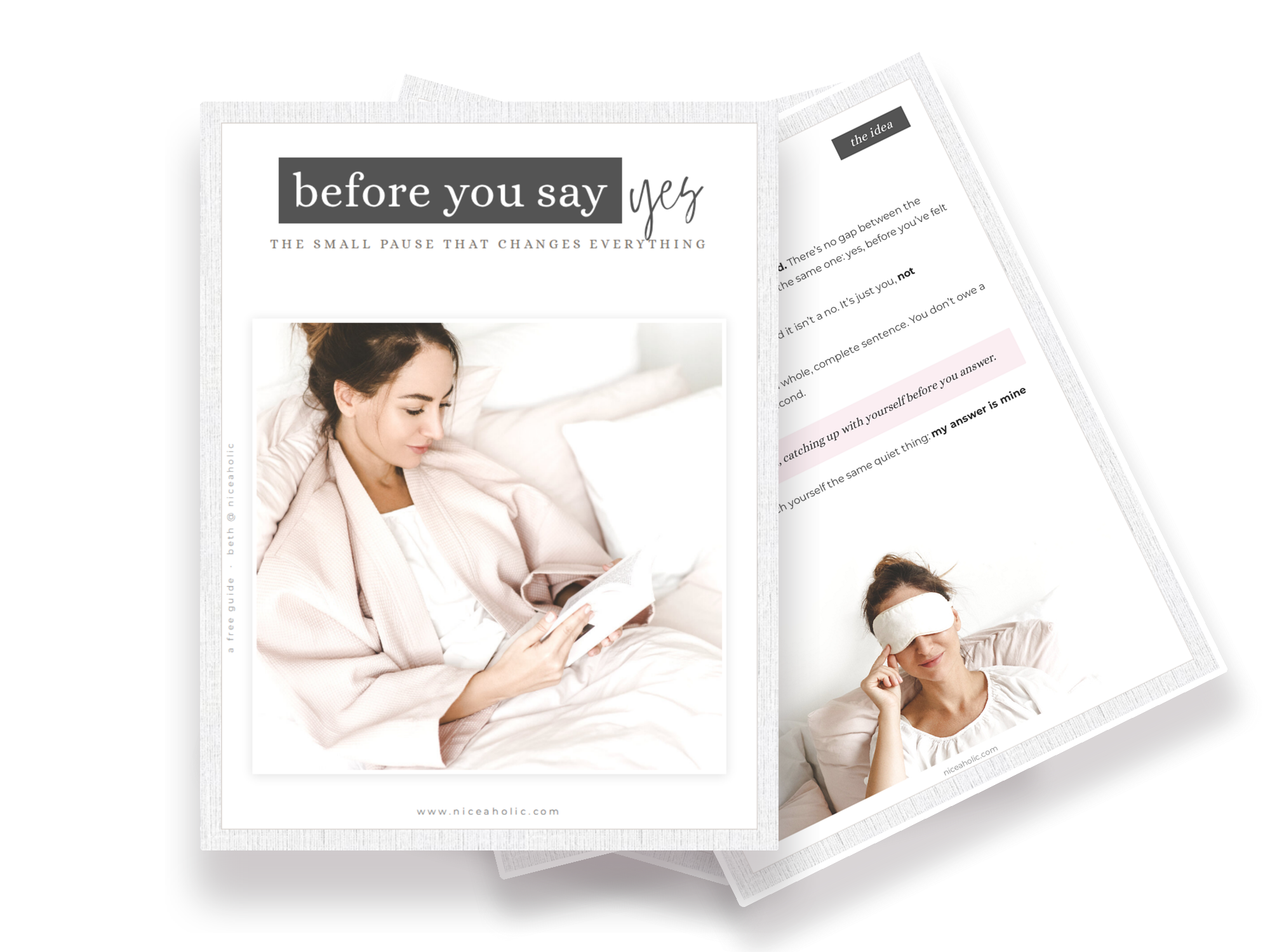
Want the words ready for when you feel the pull to explain?
Before You Say Yes is my short free guide to pausing before you answer, with lines to keep. Then you can say no without a paragraph of reasons after it.
Send me the free guideFree. Arrives by email.Before long you'll send a text after one read and put your phone face down. Your jaw unclenches, and you drink your tea while it's still hot.

This is general information, not therapy. If you're ever frightened for your safety, please contact your local emergency services.