
How to Stop Saying Sorry for Everything (Say This)
Someone bumps into you in the grocery store, and you say sorry. You message a colleague with "Sorry, quick question". A friend arrives ten minutes late, and you're the one who says sorry. Somebody talks over you in a meeting, and you say sorry for being in the way.
If "sorry" is the first word out of your mouth in almost every sentence, you can swap it for "thank you" or for nothing at all. Here's how to stop saying sorry for everything, and how to keep it for the times you really mean it.
Did you say it today, before you'd even finished asking a question? Most of us did!
The sorry that comes before everything else
None of those moments needed an apology. We say it anyway because it works as a little cushion, a way of saying "please go easy on me" before anybody has even frowned.
It's an old, polite habit, and it's very quick. Most days we've said it before we've decided whether we're sorry.
What too many sorries cost
Stop apologizing quotes can be lovely to hold onto. Here's a thought of my own to go with them. A sorry used in every sentence wears out. By the time you've said it forty times, the one you truly mean sounds just like the other thirty-nine.
I say sorry when I have bad news to give, or when I'm asking for something that I know is a nuisance, and I mean every word. I'd like you to keep all of those. What I'd like you to let go of is the cushion. The best way to tell them apart is to ask one small question.
Is it a sorry that fits?
The question is, "Did I do something that needs putting right?" If you did, say sorry and say it properly. If you didn't, use another word.
A sorry that fits
- I forgot your birthday
- I snapped at you
- I broke your mug
- I made a mistake in your invoice
A sorry out of habit
- I asked a question
- You bumped into me
- I need a minute
- I'm taking up your time
Have a look at the second list. Those are all ordinary parts of being a person in the world. You were never in the wrong in any of them. So what could you say there instead?
Keeping the two apart matters more than it sounds. When you do say sorry, people hear it.
Thank you, or nothing
A thank you still feels polite to say, so you're not fighting yourself, and the other person walks away feeling appreciated. Sometimes it's even better to say nothing and smile, especially in the grocery aisle.
If you usually attach a long explanation to your sorry, I wrote about that side of it in Stop Explaining Yourself. Quotes to Inspire Change.
How to start, one small swap at a time
- Count for one day. Keep a tally in your phone every time you say or type sorry. You're only collecting numbers, no judging. Write the number down at bedtime.
- Choose one place to swap. Start where it costs the least, such as the first line of an email to a colleague. Replace "Sorry to bother you" with "Thanks for your time" and send it.
- Leave a half-second. Before you speak, wait for the length of one breath. That's often long enough to pick the word you mean.
What if I sound cold without it?
You won't, I promise. You've been using sorry to carry a lot of your warmth, so a sentence can feel bare without it. Your warmth comes through in the thank you, the smile and the way you ask how someone's day is going before you ask for anything.
Try it at work first, with a colleague you like, where the stakes are small and nobody will make a fuss. Ask your question with a "thanks for your time" and notice what comes back. Does the person seem colder, or do they answer the question? Most of the time, I'd expect the second.
When it comes out anyway
It will, and that's ok. You've had years of practice, so it's going to slip out sometimes. When it does, you don't need to apologise for apologising (that's a loop I'd love to see the back of!). Say thank you next, smile, and carry on with your day.
If you'd like the other side of this, try How To Stop Feeling Guilty When Setting A Boundary For The First Time. It's about the guilt that can come afterwards.
Try this in ten minutes
Think of the first message you'll send tomorrow morning. Write it without the word sorry, and put a thank you where it would have been. Then send it, and see what comes back. I'd guess people will reply exactly as they always do.
Tell me how you go
Which swap did you try first, and what came back? I really love hearing how you went.
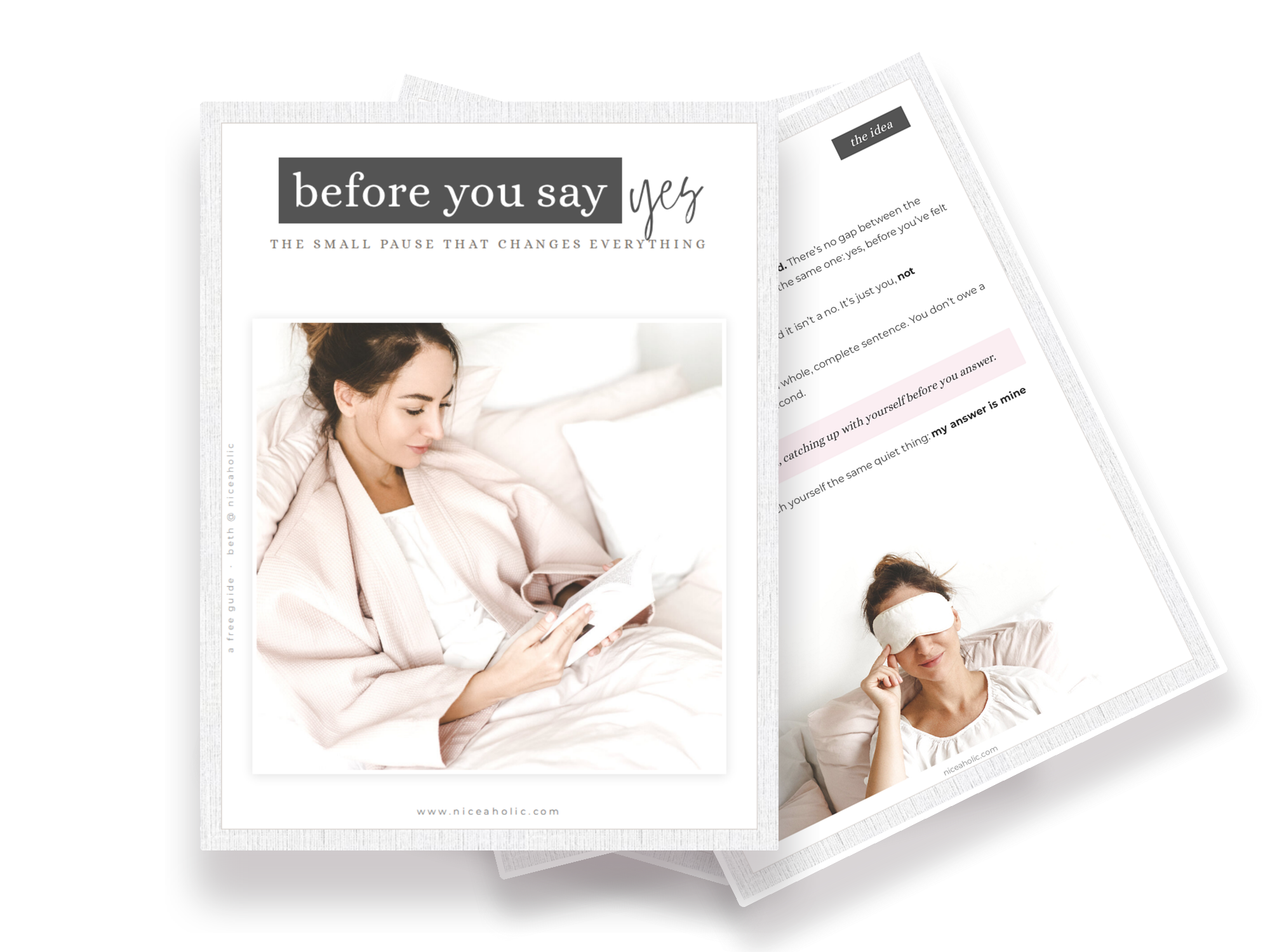
Want a breath before the sorry comes out?
My free guide, Before You Say Yes, is a short guide to pausing before you answer, with lines to keep. The same pause gives you time to pick "thank you" over "sorry".
Send me the free guideFree. Arrives by email.One morning you'll send three messages without a single sorry, sit back, and feel your shoulders come down from your ears. And the replies come back just as friendly as ever.

This is general information, not therapy. If you're ever frightened for your safety, please contact your local emergency services.